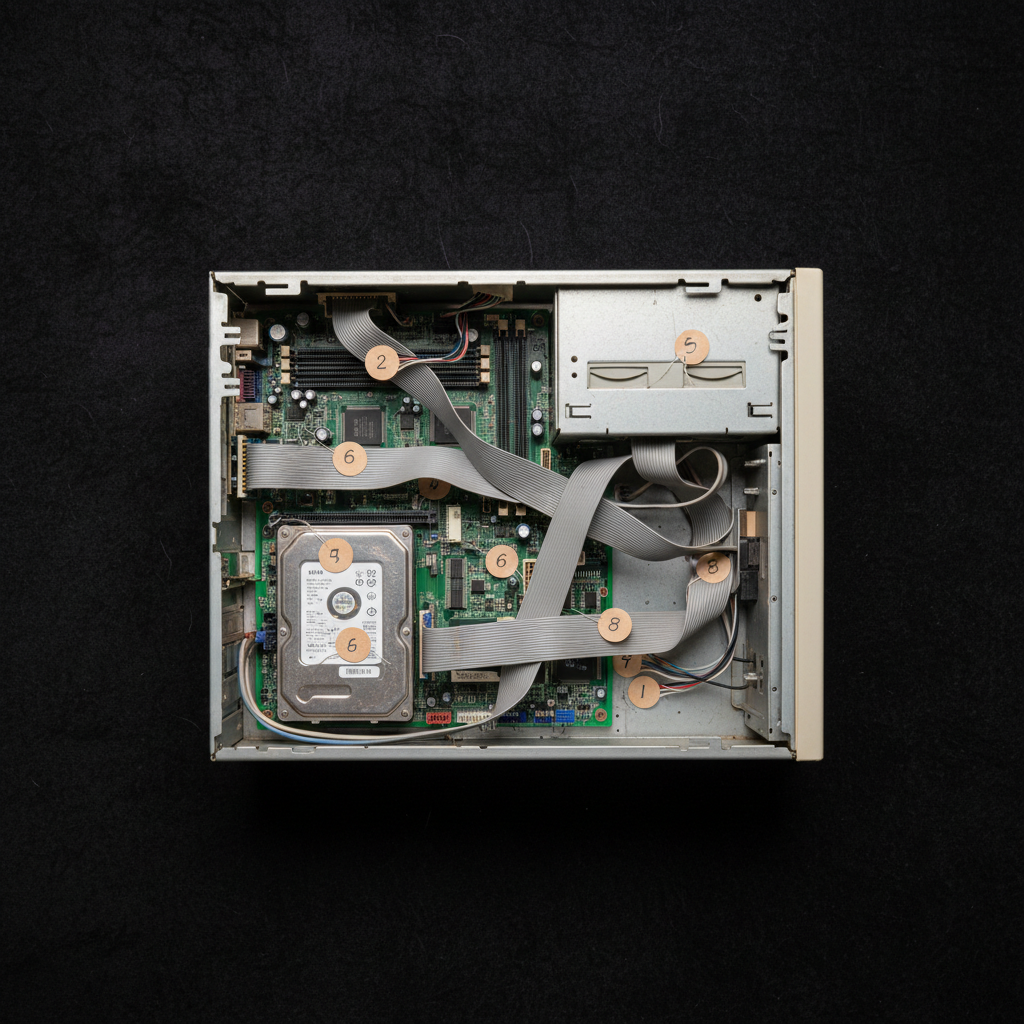
An overhead, photographic view of an opened vintage desktop computer case from the early 1990s, lying on a dark felt surface like an archaeological specimen. Exposed green circuit boards, ribbon cables, and a chunky hard drive with a metal label fill the frame, each component carefully arranged and numbered with tiny neutral-colored tags instead of text. Cool, even studio lighting reveals the fine details of solder points and dust patterns without harsh shadows. The composition follows a museum catalog aesthetic, with ample negative space around the chassis edges, conveying a calm, analytical mood. The image presents technology as layered material culture, inviting slow inspection of its inner anatomy rather than a flashy tech product shot.

Cronología de la Cultura Digital

Un mapa cronológico que enlaza hitos tecnológicos, contextos sociales y proyectos de BitBones en la historia de la cultura digital.
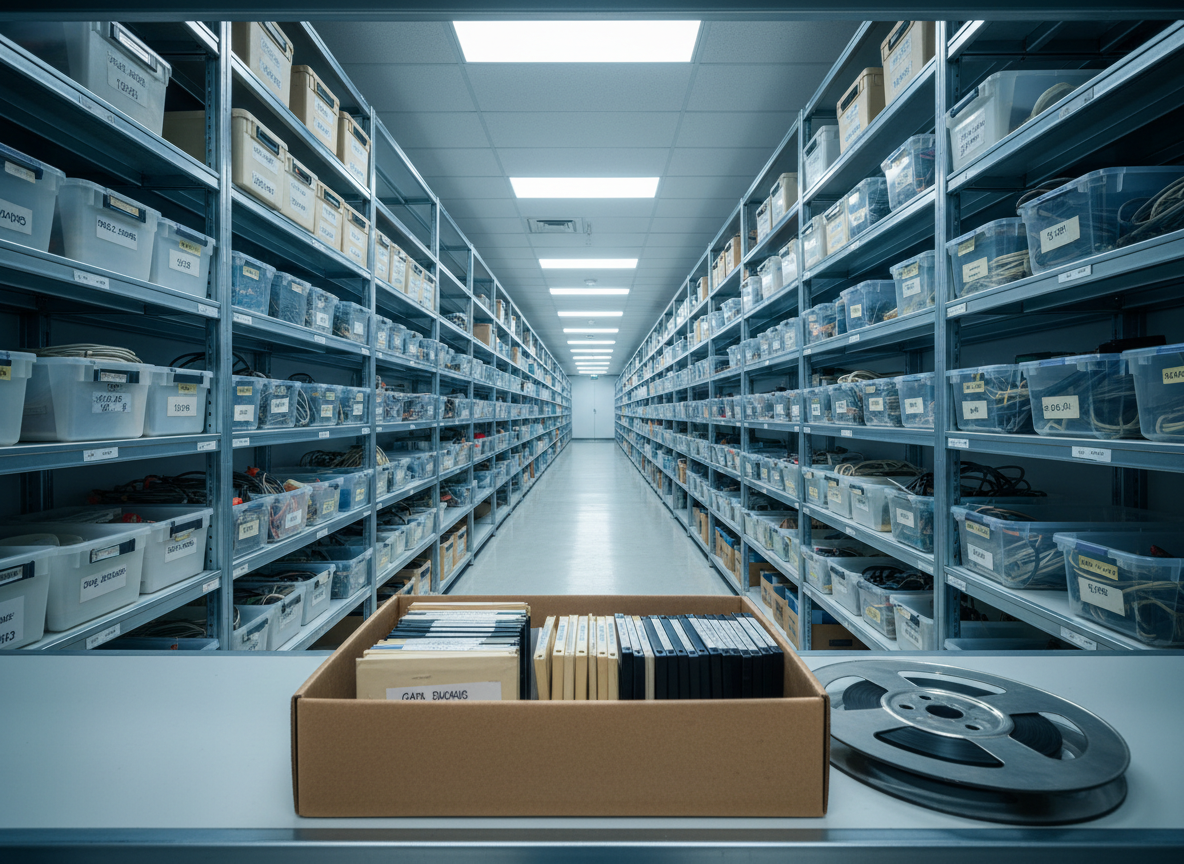
A long corridor of metal shelving in a climate-controlled archive, captured photographically, filled with neatly stacked boxes of obsolete media: labeled VHS cassettes, 5.25-inch floppy disk sleeves, jewel cases for early CD-ROMs, and plastic bins containing tangle of cables. The shelves recede into the distance under cool fluorescent ceiling panels, creating a gentle vanishing point. The foreground shows one open box with carefully arranged floppy disks and a single exposed magnetic reel, all in sharp focus. The atmosphere is hushed and almost sacred, suggesting a library of forgotten digital memories. Shot with a slightly elevated perspective and deep depth of field, the mood is reflective and sophisticated, underscoring the archival nature of technological remains.
An overhead, photographic view of an opened vintage desktop computer case from the early 1990s, lying on a dark felt surface like an archaeological specimen. Exposed green circuit boards, ribbon cables, and a chunky hard drive with a metal label fill the frame, each component carefully arranged and numbered with tiny neutral-colored tags instead of text. Cool, even studio lighting reveals the fine details of solder points and dust patterns without harsh shadows. The composition follows a museum catalog aesthetic, with ample negative space around the chassis edges, conveying a calm, analytical mood. The image presents technology as layered material culture, inviting slow inspection of its inner anatomy rather than a flashy tech product shot.
A long corridor of metal shelving in a climate-controlled archive, captured photographically, filled with neatly stacked boxes of obsolete media: labeled VHS cassettes, 5.25-inch floppy disk sleeves, jewel cases for early CD-ROMs, and plastic bins containing tangle of cables. The shelves recede into the distance under cool fluorescent ceiling panels, creating a gentle vanishing point. The foreground shows one open box with carefully arranged floppy disks and a single exposed magnetic reel, all in sharp focus. The atmosphere is hushed and almost sacred, suggesting a library of forgotten digital memories. Shot with a slightly elevated perspective and deep depth of field, the mood is reflective and sophisticated, underscoring the archival nature of technological remains.

Por qué este hito importa hoy

Cada entrada de la línea del tiempo incluye notas socio antropológicas que conectan artefactos técnicos con prácticas cotidianas, instituciones, imaginarios colectivos y transformaciones en la experiencia digital.

An overhead, photographic view of an opened vintage desktop computer case from the early 1990s, lying on a dark felt surface like an archaeological specimen. Exposed green circuit boards, ribbon cables, and a chunky hard drive with a metal label fill the frame, each component carefully arranged and numbered with tiny neutral-colored tags instead of text. Cool, even studio lighting reveals the fine details of solder points and dust patterns without harsh shadows. The composition follows a museum catalog aesthetic, with ample negative space around the chassis edges, conveying a calm, analytical mood. The image presents technology as layered material culture, inviting slow inspection of its inner anatomy rather than a flashy tech product shot.
A long corridor of metal shelving in a climate-controlled archive, captured photographically, filled with neatly stacked boxes of obsolete media: labeled VHS cassettes, 5.25-inch floppy disk sleeves, jewel cases for early CD-ROMs, and plastic bins containing tangle of cables. The shelves recede into the distance under cool fluorescent ceiling panels, creating a gentle vanishing point. The foreground shows one open box with carefully arranged floppy disks and a single exposed magnetic reel, all in sharp focus. The atmosphere is hushed and almost sacred, suggesting a library of forgotten digital memories. Shot with a slightly elevated perspective and deep depth of field, the mood is reflective and sophisticated, underscoring the archival nature of technological remains.
An overhead, photographic view of an opened vintage desktop computer case from the early 1990s, lying on a dark felt surface like an archaeological specimen. Exposed green circuit boards, ribbon cables, and a chunky hard drive with a metal label fill the frame, each component carefully arranged and numbered with tiny neutral-colored tags instead of text. Cool, even studio lighting reveals the fine details of solder points and dust patterns without harsh shadows. The composition follows a museum catalog aesthetic, with ample negative space around the chassis edges, conveying a calm, analytical mood. The image presents technology as layered material culture, inviting slow inspection of its inner anatomy rather than a flashy tech product shot.